
"Angolan coffee beans"
90 article(s) found

A brief introduction to the treatment method of grinding degree and baking degree of Angolan boutique coffee beans which are almost impossible to buy.
Angola is the fourth largest coffee industry in the world, but it produces only a small amount of Arabica coffee and is of high quality. The origin of coffee in Angola: 98% of the coffee in Angola (Angola) is Roberts coffee. The former best brands in Angola are Ambriz, Amborm and NovoRedondo, all of which are known for their consistent quality

A brief introduction to the consistent Market Price of Fine Coffee Bean varieties in Angola
In the following two centuries, the economic development of Angola was slow. At that time, although the Portuguese were also committed to developing agricultural production in Angola, the main income of the Angolan colonies at that time depended on the slave trade to Brazil, which was not abolished until 1830. It was not until the late 19th century that Angola's economy turned inland, and the Portuguese began to accumulate.

Flavor description treatment of Angolan coffee beans introduction to the taste of varieties in producing areas
Since the end of the civil war, the political situation in Angola has remained stable. In September 2008, Angola successfully held its first multi-party parliamentary election since 1992, and the Ann Movement won more than 80% of the seats. In February 2010, the National Assembly of Angola adopted a new constitution. On August 31, 2012, Angola held its first presidential and parliamentary elections since the constitutional amendment. The Anren Movement won the election with 71.84% of the vote, and dos Santos was re-elected.
Description of flavor of Angolan coffee beans, characteristics of grinding degree, introduction of price and taste of varieties
In 1575, the Portuguese began to occupy areas south of the Congo, established the city of Luanda, and conquered several indigenous tribes, allowing whites to slowly emigrate to Angola. Over the next 50 years, the Portuguese gradually expanded their territory. In 1617, Portugal established the city of Benguela in Angola, which became more stable and established Portugal's territory in Angola ever since.

What is the annual output of Angolan coffee? Small farmers growing coffee in Angola
Professional coffee knowledge exchange more coffee bean information follow coffee workshop (Wechat official account cafe_style) Joao Neto said the government plans to start investing 130 million US dollars in the coffee industry in 2010 and provide 150 million US dollars in low-interest loans to farmers who invest in the coffee industry. Our goal is to increase coffee production to pre-civil war levels, Joao Neto said.

Angola Fine Coffee Bean Flavor Description Grind Treatment Features Variety Producing Area Manor Planting Profile
In the 1970s, commercial coffee production in Angola was about 180,000 tons per year. Uige Province coffee cultivation area of 161,000 hectares, annual output of 99,550 tons, is the largest coffee cultivation

Description of Flavor and Grinding degree of Angola Coffee Bean introduction to the taste producing area of varieties
In the 1970s, Angola produced about 180000 tons of commercial coffee per year. With an area of 161000 hectares and an annual output of 99550 tons, Uige Province is the largest coffee grower.

Basic knowledge of Angolan fine coffee beans from coffee producing area
In the mid-1970s, Angola (Angola) exported 3.5 million bags of coffee a year, 98 per cent of which was Robbins (probably the best in Africa), but total production fell to 200000 bags in 1990. The best brands in Angola used to be Ambriz, Amborm and Novo Redondo, all of which are consistent

A brief introduction to the history and culture of the origin and development of Angolan boutique coffee beans that are almost impossible to buy.
Angola was once one of the largest coffee producers in the world, with coffee production reaching a record 225000 tons in 1974. However, as a result of the 27-year civil war that broke out after independence in 1975, Angolan coffee production fell sharply, Angola's ambassador to the United States, Agostinho Tavares, told Angolan daily newspaper Jornal de Angola on Monday in New York that the first batch of Angolan coffee exported to the United States (a total of 11 tons) had arrived in the country.

The best brands of Angolan coffee beans used to be Ambrish, Ambalim and New Ridondo.
Professional Coffee knowledge Exchange more Coffee Bean Information Please follow Coffee Workshop (Wechat official account cafe_style) comes from the most primitive wild jungle in Ethiopia, where coffee trees grow naturally under the protection of rainforest trees, and litter is the best natural organic fertilizer. Many people recognize it.

This paper briefly introduces the characteristic growing environment of Angolan coffee beans, Burundi coffee beans and Cameroon coffee beans.
Professional coffee knowledge exchange more coffee bean information Please follow Coffee Workshop (Wechat official account cafe_style) Angola was once a big coffee producer. In the mid-1970s, Angola (Angola) exported 3.5 million bags of coffee a year, 98% of which was Robex (which may be the best Robbins coffee in Africa). In 1990, total production dropped to 20%.
Introduction to the characteristics of five types of coffee: Costa Rican coffee, Angolan coffee, Esopia coffee teeth.
The coffee beans produced in the high latitudes of Costa Rica are famous in the world, full-bodied, mild in taste, but extremely sour. The coffee beans here are carefully processed, which is why they have high quality coffee. The famous coffee is produced in the CentralPlateau, where the soil consists of successive layers of volcanic ash and dust.
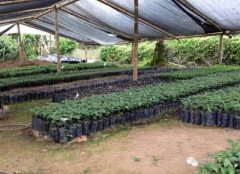
A brief introduction to the cultivation of high-quality Angolan boutique coffee beans, geographical location, climate and altitude
The Secretary-General of the African Coffee Organization (Coffee Organization), Joseph Farrayasarko, said on the 10th that Angola is expected to regain its status as a major coffee producer in the world due to the launch of a nationwide coffee planting campaign. In analyzing the global financial crisis and the situation of the international coffee market, Sako said that there are still gaps in the international coffee market. Angolan coffee should not only improve its output, but also its quality.

Angola Coffee Bean Price Flavor Description Grind Treatment Growing Environment Introduction
In the 1970s, commercial coffee production in Angola was about 180,000 tons per year. Uige Province coffee cultivation area of 161,000 hectares, annual output of 99,550 tons, is the largest coffee cultivation

A brief introduction to the cultivation of high-acidity Angolan boutique coffee beans, geographical location, climate and altitude
The origin of coffee in Angola: 98% of the coffee in Angola (Angola) is Roberts coffee. The best brands in Angola used to be Ambriz, Amborm and NovoRedondo, all of which are known for their consistent quality. Angola was once one of the largest coffee producers in the world, with coffee production reaching a record 22.5 in 1974

Coffee producing areas in Angola, coffee characteristics in Angola
Follow the caf é (official Wechat account vdailycom) and found that the Cafe Beautiful has opened a small shop of its own in Angola where coffee is produced: 98% of the coffee in Angola (Angola) is Roberts. The best brands in Angola used to be Ambriz, Amborm and NovoRedondo, all of which are known for their consistent quality. Ann

Introduction to the characteristics of Flavor description treatment of Angora Coffee Bean
In 1575, the Portuguese began to occupy areas south of the Congo, established the city of Luanda, and conquered several indigenous tribes, allowing whites to slowly emigrate to Angola. Over the next 50 years, the Portuguese gradually expanded their territory. In 1617, Portugal established the city of Benguela in Angola, which became more stable and established Portugal's territory in Angola ever since.

Global Coffee Origin-Angola
Angola is the fourth largest coffee producer in the world, but it produces only a small amount of Arabica coffee, which is of high quality. Angola coffee origin: 98% of Angola's coffee is Robett coffee. Angola's best brands used to be Ambriz, Amborm and NovoRedondo, all known for consistent quality
The coffee flavor of the world's largest coffee country describes the taste of Brazilian coffee.
In the first six months of 2008, Vietnam exported 570000 tons of coffee, with an export value of US $1.18 billion, far exceeding the level of the same period last year. In 2007, Vietnam's coffee exports exceeded 1 million tons for the first time, reaching an all-time high of US $1.6 billion. According to the statistics of the Coffee-Cocoa Association of Vietnam, the current coffee planting area in Vietnam is 500000 hectares, which can be divided into three categories according to the planting time.